

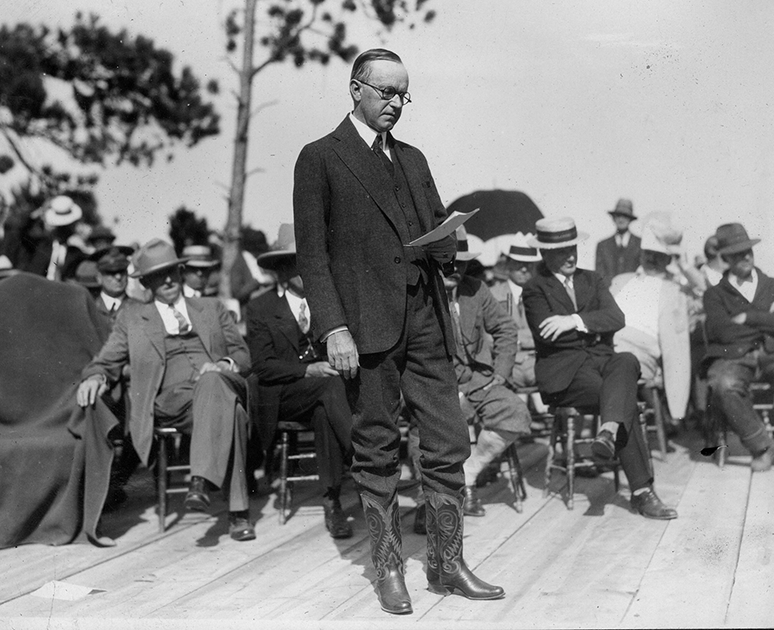
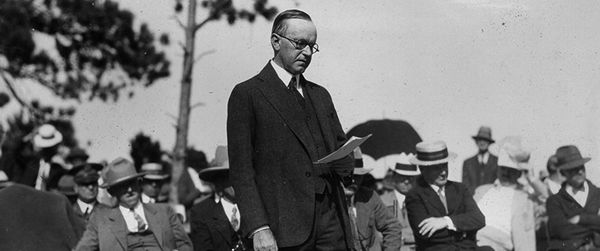
 President Calvin Coolidge and his wife Grace spent the summer of 1927 in the Black Hills of South Dakota, and altered the course of the region's history. Bringing international attention to a forgotten corner of the American landscape, Coolidge's decisions that summer shaped the history of the nation. During their time in the Black Hills, the Coolidges fished, hiked, rode horses, watched rodeos and visited the Pine Ridge Indian Reservation. This virtual exhibit memorializes and interprets their summer in the Black Hills.
 A collaboration of the libraries of six South Dakota colleges and universities.
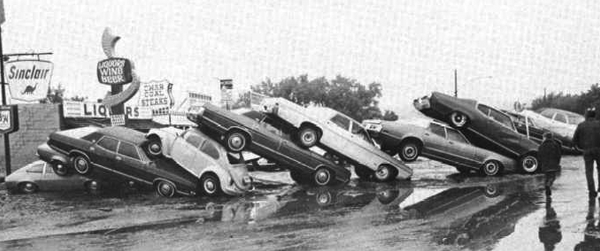
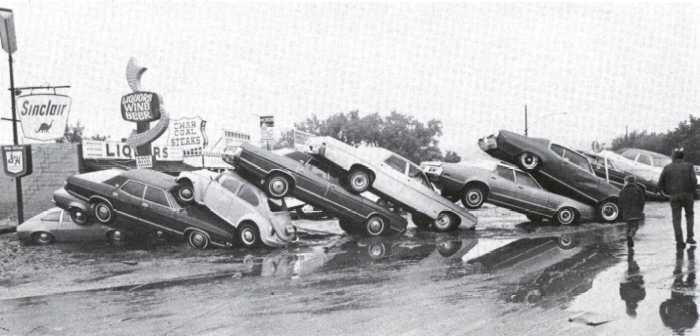 On June 9, 1972 a disastrous flood swept through Rapid City, taking the lives of 238 residents and resulting in millions of dollars in damages. This site consolidates information about this devastating event, and includes photographs, oral histories, written memories, radio and television broadcasts, and other documents.
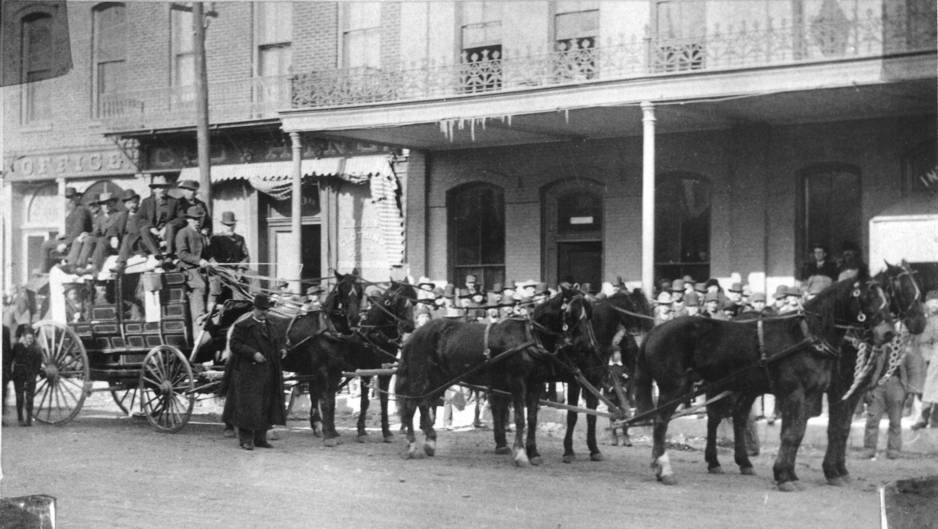 This original content from the Rapid City Public Library includes a wide assortment of historical documents, books, images, articles and much more. The digital collections cover the Black Hills region and are contributed to by area libraries.
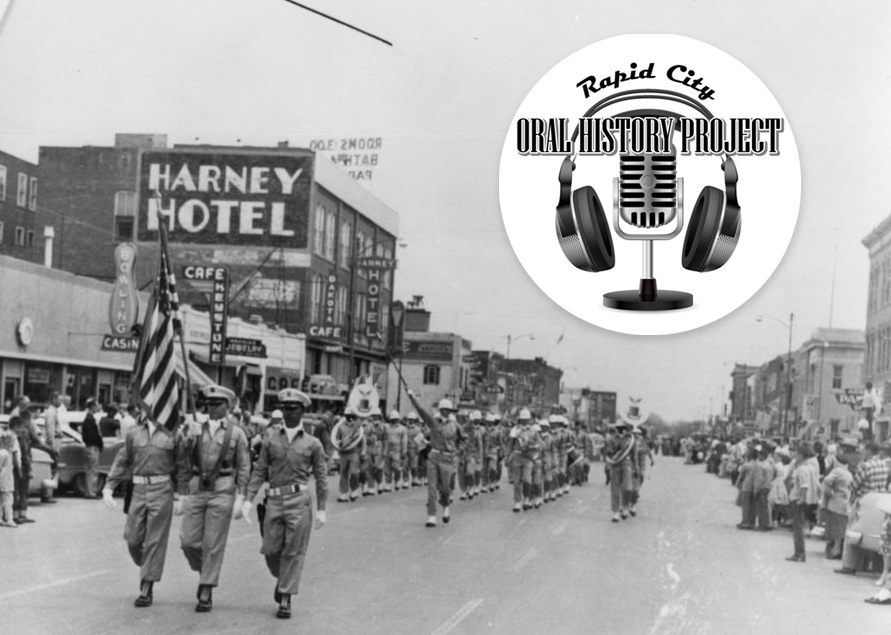 The Oral History Project contains recorded interviews with residents of Rapid City and the surrounding area who share stories, insights, and community history. If you or someone you know would like to take part in this project, please contact the library at (605) 394-6139 or email ask@rcpl.org.
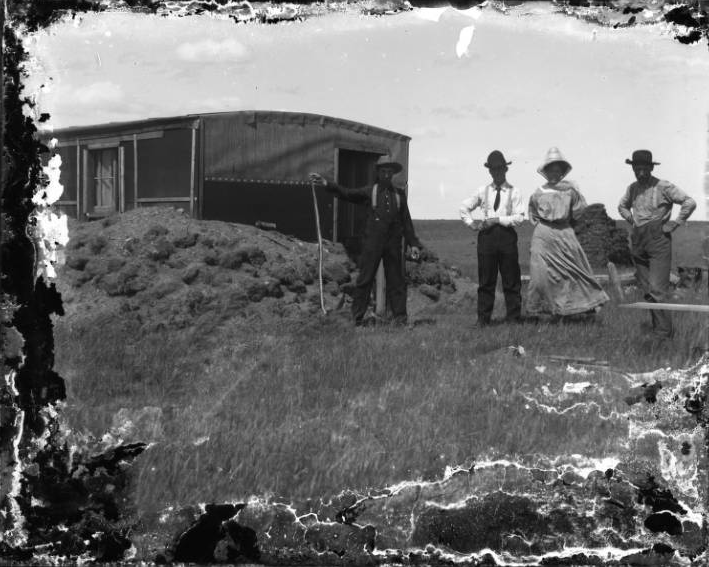 South Dakota State Historical Society's online collection of government documents, manuscript collections, and photographs. Contains over 70,000 items with new content added weekly.
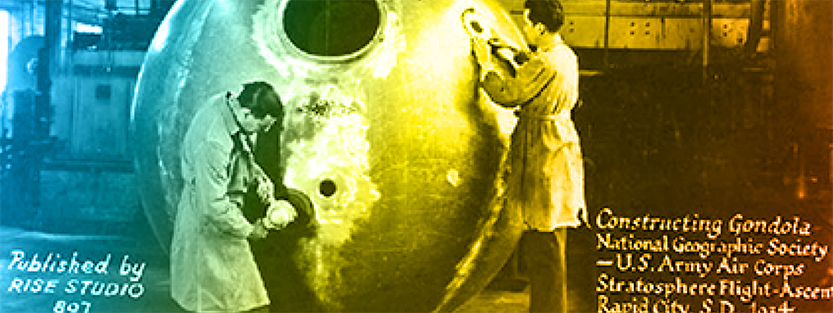
 This collection, housed at the Journey Museum in Rapid City, provides a look into the history of the Black Hills area, including information on the Stratobowl Flights, the 1972 Flood, and the early pioneering history of the Black Hills.
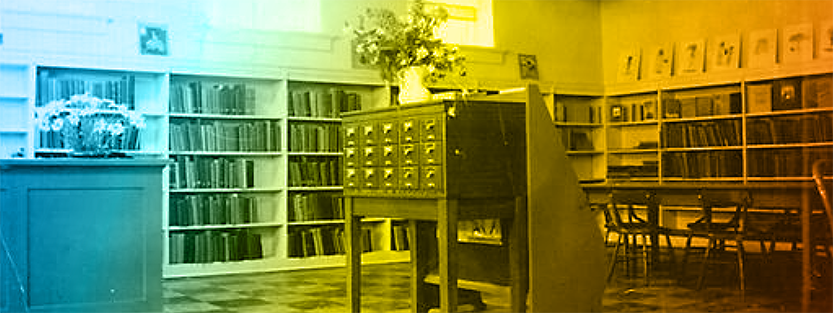
Library Hall was a 32’ x 85’ wood frame building for use as a reading-room, library, and theater. It featured a 25’ stage, seated 450, and its bookcases were furnished with 500 volumes of biography, poetry, science, and fiction. Its librarian, Lida Mitchell, earned $5 a month. The reading room was open six hours a week, and readers could check out only one book at a time.
Membership was limited to 100 persons for a $12 share plus a $9 initiation fee and $4 annual dues. The Association was free of debt by 1887. Until the turn of the century, Library Hall served the community, not only as a library, but as the Methodist and Congregational churches, a civic center for social, political, and civic activities, lectures, concerts, ballroom dances, and funerals.
Lillian Nyswanger, to whom legend assigns a quick temper, finally became librarian. Several histories claim she was forced to resign after throwing a book at a patron. In 1973, Laura Van Nuys told interviewer David Super that Lillian Nyswanger was “one of the few people in those days that had read every book we had in the library...she had a different personality, but was certainly not given to such brash actions as (throwing a book at a patron).”
Library Director Greta Chapman was elected South Dakota Library Association President.
$200,000 Space Reconfiguration
On Friday, March 7, 2008, USA TODAY listed the Rapid City Public Library as one of the "10 great places to find a nook and read a book".
Library Card Sign-Up Month, Mayor Alan Hanks
The Big Read, Mayor Alan Hanks
Rapid City Public Library Statistics
ILS and RFID Implementation Detail
Search for knowledge going digital at library
November 30, 2012: RCPL County/City Public Library East Grand Opening
December 1, 2015 - Opening of the Local History Room
RAPID CITY AND BLACK HILLS HISTORY
Calvin Coolidge Visits the Hills
Digital Library of South Dakota
Flood of 1972
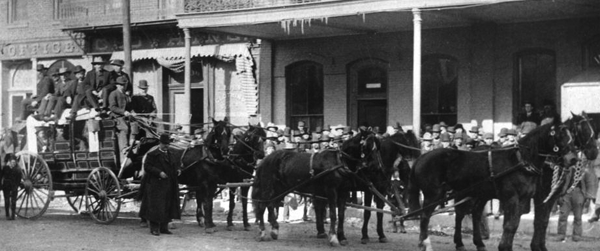
Rapid City Library Digital Archives
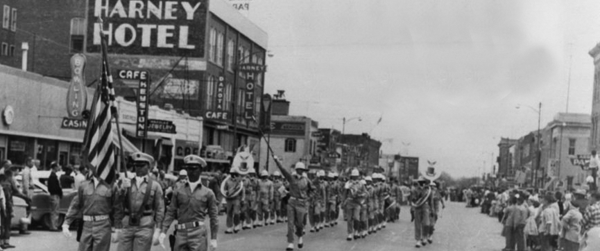
Oral History Project
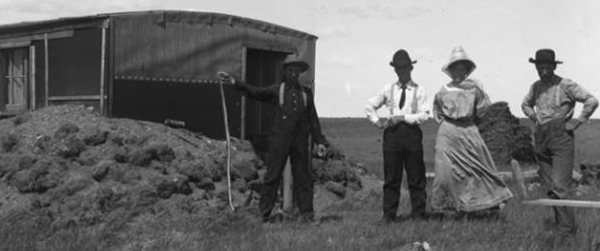
South Dakota Digital Archives

The Journey Museum Online Collections
LIBRARY HISTORY
1870s
1879
Community women used $45 to organize a volunteer reading room in the Sweeney Building. The reading room had donated books and magazines and a free subscription to the Minneapolis Journal.
1880s
1881
Newly chartered by the territorial government, the Rapid City Library Association raised $600 seed money in February to build a library. Library Hall was built on the corner of 6th and Kansas City Streets on land donated by John Brennan; the flag pole was erected in March.
Library Hall was a 32’ x 85’ wood-frame reading room, library, and theater. It featured a 25’ stage, seated 450, and it contained 500 volumes of biography, poetry, science, and fiction. Librarian Lida Mitchell earned $5 a month. The reading room was open six hours a week, and readers could borrow one book at a time.
Membership was limited to 100 persons for a $12 share plus a $9 initiation fee and $4 annual dues. The Association was free of debt by 1887. Library Hall served the community until the turn of the century as a library, the Methodist and Congregational churches, a civic center for social, political, and civic activities, lectures, concerts, ballroom dances, and funerals.
1900s
1903
Members of the Currents Events Club (still active today) proposed a tax levy to revive library services and pave the way for a Carnegie Library. A letter to the editor compared the tax per citizen equal to the value of two cigars. In a municipal vote of 115 to 88, a one mill levy was passed and free library services were offered in a succession of rented locations. The 6th and Saint Joseph Street corner room of the Flormann Block was rented for $15 a month and Miss Rose Bower was appointed librarian. John C. Bower, her father and president of the Rapid City Free Library Association, maintained an apartment behind the library room for Rose and her sister Laura.
1904
Rose Bower resigned, and Laura Bower became librarian.
1905
169 new books were purchased with $30 from the library fund and $70 raised from a talent show benefit play called Captain Racket.
1909
The library may have moved next door into what was the Todden-Worth Building on 6th Street, then back again into the Flormann Building. Laura Bower married Claude C. Van Nuys - whom she met at the library. Their son, Maxwell Van Nuys, later wrote, “Lillian Nyswanger wanted the librarianship at the same time and resented it going to Laura, who had been her friend, and never forgave her. (Thereafter, Lillian could never pass my mother in the street without making a face.)”
Lillian Nyswanger, to whom legend assigns a quick temper, finally became librarian. Several histories claim she was forced to resign after throwing a book at a patron. In 1973, Laura Van Nuys told interviewer David Super that Lillian Nyswanger was “one of the few people in those days that had read every book we had in the library...she had a different personality, but was certainly not given to such brash actions as (throwing a book at a patron).”
1910s
1910
Leora J. Lewis was appointed librarian.
1912
The library moved into a corner room in the Elks Building for $60 monthly rent - which was later reduced to $35.
1913
The library received advice from the State Free Library Commission on how to apply for a Carnegie grant for a new library building.
1914
The Library Board, appointed by the city according to state law, formally applied to Andrew Carnegie for a grant. The ensuing process to meet requirements resulted in a site dispute which was ultimately settled in State Supreme Court. Library Hall was removed to make way for the new Carnegie Library on the northwest corner of 6th and Kansas City Streets.
1915
The building of the new Carnegie library began with a $12,500 grant.
1916
The new Carnegie Library opened its doors. The Rapid City Journal described the opening ceremony: “... all expressed themselves as being pleased with everything from the large library room with its many shelves, books, drinking fountain, chairs and tables, to the conveniences below including the charming little assembly room for the use of clubs and committee meetings."
1918
Leora Lewis moved to Pierre to become the State Librarian and was eventually replaced by Marjorie Smith, who held the position until her death in 1956.
1920s
1921
The annual report showed a collection of 4120 volumes and 16,974 loans. The assistant’s monthly salary was raised to $75 and Marjorie Smith’s to $100.
1930s
The Carnegie Library underwent a WPA project expansion, as explained in a letter by Marjorie Smith to the American Library Association.
1960s
1965
Discussion began about replacement of the Carnegie Library due to insufficient space, increased population and needs of the Rapid City area. Planning began for a new library to serve the growing community. The planning commission was comprised of library trustees, city and state officials, an Omaha library consultant and Chamber of Commerce representation. The Rapid City Civic Library Building Association incorporated under state law, and efforts began to build a new library at 610 Quincy St.
1970s
1970
The Rapid City Civic Library Building Association was granted a charter by the State of South Dakota. The purpose of this group was to raise money for the construction of a new library.
1972
On October 24, 1972, the doors opened to a new 28,000 sq. ft. building to serve Rapid Citians. The new facility boasted reading room seating for nearly 200, a spacious children's area, ample office and work space, a magazine/reference room, an art loan display wall, a board/conference room, and a meeting room for groups of up to 60. Rapid City Public Library Board of Trustees members were Faye Crawford, James M. Kuehn, Curtis D. Ireland, Beverly Linderman, and William G. Porter. Serving along with the trustees on the Rapid City Civic Library Building Association, Inc. Board of Directors were Stanford M. Adelstein, Barbara Gunderson, and Dean S. Nauman; Helen Hoyt was Library Director.
1975
A new book drop was installed in the parking lot of the Kmart building.
1976
Blue Stem Woman statue by Dale Lamphere was dedicated. This work was commissioned by the Rapid City Civic Library Building Association and funded by a $50,000 gift from Mrs. Ray Kroc.
1979
The Rapid City Public Library joined the computer age with an online catalog system. An Analysis of the Rapid City Public Library and Its Community was published by library staff to explain how the library meets the needs of the community. A bookmobile service was launched.
1980s
1982
The Rapid City Public Library building at 610 Quincy Street is ten years old. Your New Rapid City Public Library 1972-1982 is published with comparative pictures of the interior and exterior.
1985
Helen Hoyt retired as Library Director on January 31st after nearly 30 years of service. Susan Sandness became the head librarian.
1989
Since 1979, checkouts increased by 41% and reference and magazine use by 89%. Staffing was down by 11%, and the Library relied on over 500 volunteer hours to maintain levels of service.
1990s
1995
Kathy Fredette begins as Library Director. The library closes temporarily for new paint and carpet.
1997-98
Technology grants provide a computer network and the library launched its first website which enabled Internet users to browse the South Dakota Library Network.
1998
Greta Chapman begins as Library Director.
1999
The Electronic Resource Center, a computer area of Internet access machines, was dedicated. A contract with Pennington County was signed to provide library services to Pennington County residents.
2000s
2000
After several years of planning, the library presented an expansion plan to the city’s Vision 2012 capital improvements program. Approval for a new 19,000 sq. ft. addition to be built above the west parking lot was given on the condition of the library raising $500,000.
2001
The Library Foundation successfully raised over $650,000. On March 19th, the Rapid City Library Foundation Board presented a ceremonial check to the Rapid City Council symbolizing the completion of their capital fundraising campaign. Groundbreaking ceremonies for the new addition took place on August 27, 2001. The project also provided renovation monies to convert the old entrance to a solarium, the creation of a South Dakota Research and Genealogy Room, study room additions and reference desk improvement.
2002
On August 30th, the Youth Services department was moved upstairs into the new space, which included an expanded Young Adult area, study rooms, aviary, and reading loft for young children. A dedication ceremony for the new expansion took place on September 21. Rearrangement of the adult collection stacks, audio and video collections, and adult reading areas concluded in November. The solarium was finished and furnished with western decor and an aquarium of native game fish. Grand opening dedication remarks were made by Library Director Greta Chapman.
2003
In March 2003, wireless access became available in the library. The dedication of the final phase of the expansion: the South Dakota Research and Genealogy Room took place on April 12.
2005
Newspaper Digitization Project
2007
Pennington County Library Services Contract was approved.
A $200,000 space reconfiguration project was completed for the main floor areas.
2008
On January 14, 2008, the library's first satellite site, Rapid City Public Library North, was opened in the new General Beadle Elementary School. This site offered public library materials and resources from the school library. A Grand Opening and Dedication ceremony for took place on March 8. Speaking at the ceremony were Library Director Greta Chapman, Library Board Chairman James Olson, Mayor Alan Hanks, Superintendent of Schools Peter Wharton, City Councilman Lloyd LaCroix, and Mark Kenefick representing General Beadle Elementary School. Entertainment was provided by the Standing Horse Drum Group and RCPL library staff served a free chili lunch to community members.
On Friday, March 7, 2008, USA TODAY listed the Rapid City Public Library as one of the "10 great places to find a nook and read a book".
2010s
2010
The library implemented a new catalog and checkout system, including Radio Frequency Identification (RFID) tags for library materials.
Hard to find local information was made available online by the Rapid City library and other libraries throughout the Black Hills.
2012
On November 30, 2012: RCPL County/City Public Library East Grand Opening
2013
Greta Chapman resigned as Library Director; Terri Davis served as Interim Director.
2014
Jim McShane begins as Library Director.
2015
April 2015 - CHAOS (Creative, Hands-on, Artistic, Original, Space) Makerspace opened.
December 1, 2015 - A new Local History Room, including a climate-controlled vault for archival materials, opened.
2016
Stained glass windows created were installed in the Local History Room.
2017
May - the library hosted a Grand Reopening reception following remodeling of the Adult Services area of the Downtown Library.
August - Terri Davis begins as Library Director.
2020s
2020
Library operations were impacted by the COVID-19 pandemic. School closures resulted in the closure of the North Branch Library at General Beadle in March; the closure became permanent in July. The main library was closed from March 16 - May 31, serving the public at the drive-thru window. In order to serve the North Rapid community, and in anticipation of a future bookmobile, a pop-up library service was started in July, with various locations in North and northeast Rapid City.
2024
On May 17th, the new bookmobile was unveiled to the public at an open house at Founders Park. A ribbon cutting was held on May 21st in front of the library. The bookmobile made stops throughout the community Tuesday through Saturday.